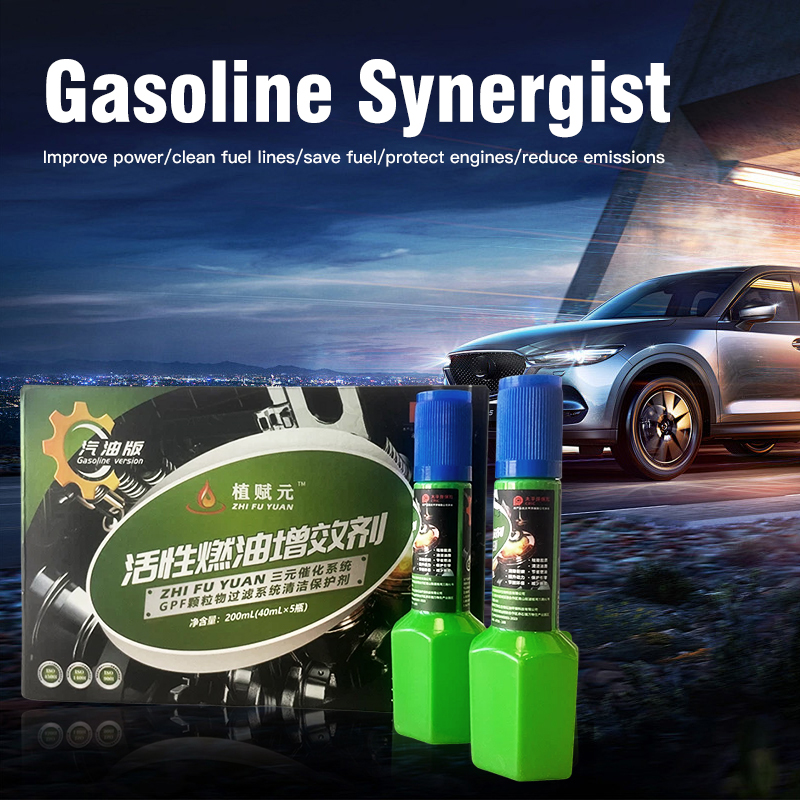

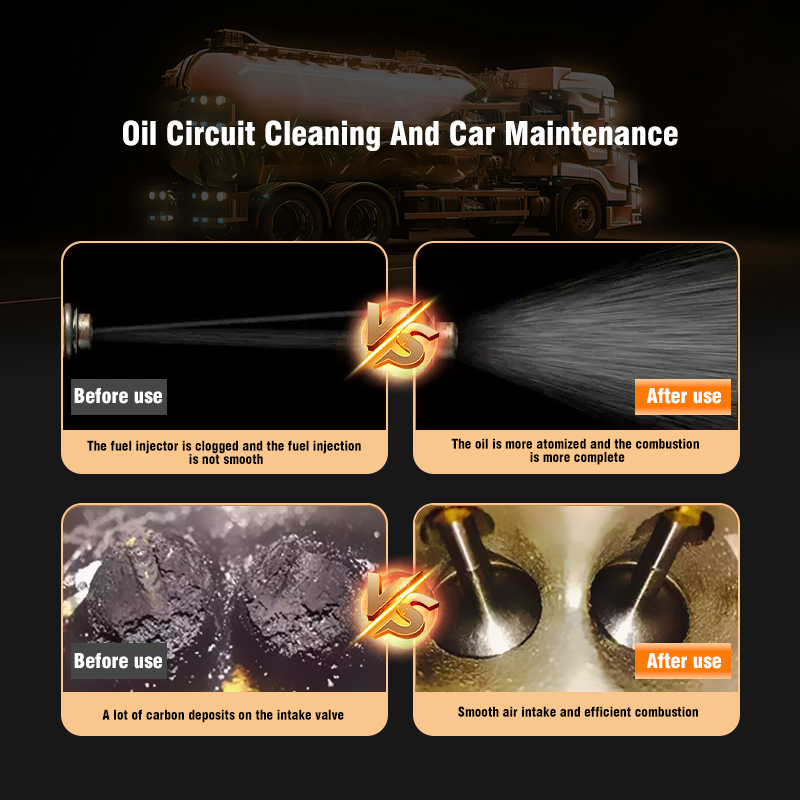
The impact of gasoline fuel enhancers on nitrogen oxides in exhaust emissions needs to be analyzed comprehensively from three aspects: its mechanism of action, actual effect, and usage conditions.
Diesel Fuel Enhancer was developed to address this issue. With its unique formula and technological advantages, it demonstrates superior performance in improving fuel quality, cleaning the fuel system, and protecting the engine, making it the preferred ch
The gasoline fuel enhancer introduces a "bioactive oil replacement" mechanism, combining nanoscale active ingredients and biomimetic molecular structures to achieve a technological leap from "surface cleaning" to "deep replacement," efficiently removing c
Against the backdrop of inconsistent diesel quality and increasingly stringent environmental regulations, diesel fuel enhancers are becoming a key technological vehicle for improving engine performance and achieving green operation.
During long-term diesel engine operation, incomplete combustion, fluctuating fuel quality, and high-temperature and high-pressure environments collectively lead to a common and insidious problem: the persistent accumulation of in-cylinder deposits.
The function of detergent dispersants in gasoline fuel enhancers has evolved from simple carbon deposit removal to active maintenance of octane number stability.